

Owning a pool in Phoenix means year-round sunshine, backyard memories, and a constant battle with the desert climate. Over time, that mix of intense UV rays, hard water, and chemical use starts to take its toll on your pool’s surface. Even the best plaster or pebble finish will eventually show signs of wear—and knowing when to resurface can help you avoid costly repairs later on.
At Valley Pool Remodel, we’ve helped homeowners across the Valley restore their pools for more than 20 years. If you’re unsure whether your pool is just showing its age or truly needs resurfacing, here’s what to look for—and when to take action.
If walking in your pool feels more like walking on rough concrete than smooth plaster, that’s one of the clearest signs it’s time to resurface. Over time, the chemicals and minerals in Phoenix’s hard water erode the surface layer, leaving it etched and coarse. Not only is it uncomfortable, but rough areas trap algae and debris, making the pool harder to clean.
When homeowners start telling guests to wear water shoes in the shallow end, it’s a safe bet the surface has reached the end of its lifespan. A fresh finish—like mini-pebble, PebbleTec, or quartz—restores a smooth, durable feel that’s both comfortable and easy to maintain.
Phoenix pools face another challenge: heavy mineral content. Over time, calcium, metals, and chemical reactions create stains that brushing and acid washing can’t remove. You might notice blotchy patches, yellow or rust-colored spots, or dull white scaling near the waterline.
When stains are deep in the surface, resurfacing is the only real fix. A new mini-pebble or quartz finish resists staining far better than old plaster and gives your pool a clean, modern look. If discoloration has become a constant battle, it’s time to refresh.
Small surface cracks are common in older pools and can appear due to Phoenix’s extreme temperature swings—hot days, cool nights, and dry conditions that cause concrete to expand and contract. But when cracks deepen, widen, or run along the tile line, they can allow water to seep through the surface layer.
Water loss not only increases your utility bill, but it can also weaken the pool shell and decking over time. If you notice long cracks, it’s best to schedule an inspection before the damage spreads. Our licensed team can determine if the cracks are purely cosmetic or a sign it’s time for a full resurfacing.
As plaster ages, it begins to delaminate from the concrete shell. You might see flakes coming loose, chalky residue on your pool brush, or small patches where the surface is peeling. This is called “spalling,” and it’s one of the final stages of surface failure.
Flaking plaster isn’t just unattractive—it can make the surface sharp and uncomfortable to swim on. If you’re noticing chalky water or white dust at the bottom, it’s time for a professional resurfacing before the damage reaches the shell itself.
Phoenix homeowners often assume water loss is just from evaporation, especially in summer months. But if you’re topping off your pool more than once a week or notice water levels dropping rapidly even in cooler weather, the surface may be compromised.
Leaks can form through cracks or thin plaster layers that allow water to escape into the concrete below. Resurfacing seals the pool with a new, watertight finish—saving you money on water bills and preventing costly structural repairs later.
Sometimes resurfacing isn’t about damage—it’s about style. Faded plaster, dated colors, or old-fashioned tile can make a backyard look tired, even if the pool is technically functional. Modern finishes come in a wide range of textures and tones, from sleek white quartz to deep blue PebbleTec.
If you’re ready for a more contemporary look, resurfacing lets you upgrade your finish, add new tile, and refresh the entire pool area. Many homeowners choose to pair this with deck updates or a full pool remodel in Tempe or other nearby cities for a complete backyard transformation.
If your water never seems to stay clear—even after balancing chemicals or backwashing your filter—the surface itself might be breaking down. As old plaster deteriorates, it releases tiny particles of calcium and dust into the water, giving it a cloudy or milky appearance.
This not only affects water clarity but also throws off your chemical balance, requiring constant adjustments. Resurfacing removes the source of those particles and gives your pool water a crystal-clear finish again.
Pebble finishes like mini-pebble or PebbleTec are known for their longevity, but even they eventually wear down. If you start finding loose pebbles collecting at the bottom or notice rough patches where stones have dislodged, resurfacing is needed to re-bond the aggregate.
A professional re-finish brings back the smooth texture and shine while extending the life of the surface for another decade or more.
Even without visible damage, the age of your pool’s surface can tell you when it’s time for attention. In Phoenix’s climate:
If your surface is nearing or past these ranges, resurfacing soon can prevent small issues from turning into expensive repairs. A proactive approach is always less costly than waiting for cracks or leaks to appear.
Desert living comes with some unique challenges for pool owners. The combination of:
These factors mean that even a well-maintained pool may need resurfacing sooner than one in a milder climate. It’s not a sign of poor maintenance—it’s simply the nature of Arizona weather. When we resurface pools across the Valley, we use premium materials and application techniques designed specifically for this environment. Explore all our pool remodeling and resurfacing services to see how we can protect your investment.
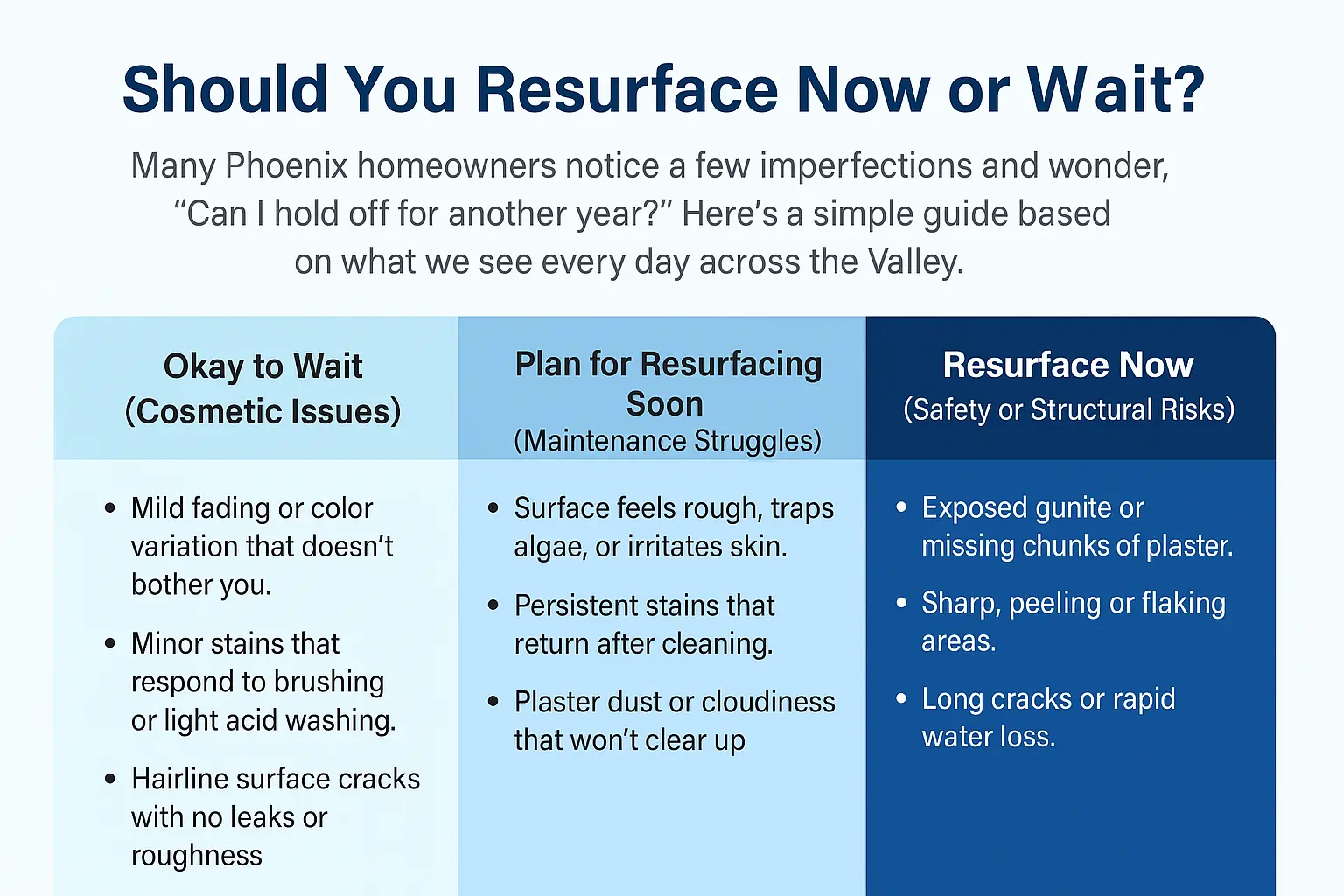
Many Phoenix homeowners notice a few imperfections and wonder, “Can I hold off for another year?” Here’s a simple guide based on what we see every day across the Valley.
You can often live with these issues for a while, but keep an eye on them—Arizona’s heat accelerates deterioration quickly once it starts.
These signs mean the surface is wearing thin. It’s not urgent yet, but scheduling resurfacing in the coming months will save you from more costly repairs.
These are signs the surface has failed. Resurfacing now protects your pool shell, reduces water waste, and restores safe swimming conditions.
Homeowners often picture weeks of construction, but resurfacing is a fairly quick process. A typical project takes about 5–7 days, depending on pool size and weather. Here’s what happens:
Throughout the process, our crew maintains clear communication and respects your property—keeping the area tidy and minimizing downtime.
Resurfacing isn’t just about looks—it’s about protecting your investment. A fresh surface prevents leaks, reduces maintenance costs, and keeps your pool safe for family and guests.
It also increases energy and water efficiency. A smooth, sealed surface improves circulation, reduces the need for constant refilling, and prevents chemical waste from chasing imbalance issues.
When resurfacing is paired with deck restoration or new tile, it can completely renew your backyard. If you’re considering a full upgrade, explore our Scottsdale pool resurfacing projects for design inspiration and durable finish options.
Every pool and homeowner is different. When you resurface, you’ll have several materials to choose from—each with its own benefits and lifespan.
Our team helps you choose a finish that fits both your budget and your backyard design. We source top-tier materials that are specifically formulated for Arizona’s conditions.
Once your pool is refinished, a little routine care goes a long way. To maximize lifespan:
With proper care, your new finish can last 15–20 years or more, depending on the material.
When your pool starts showing its age, you don’t have to start from scratch—you just need the right team to restore it. At Valley Pool Remodel, we specialize in transforming outdated or damaged pools into beautiful, long-lasting outdoor spaces.
From plaster repair and PebbleTec refinishing to full pool and deck remodeling, our licensed, bonded, and insured professionals bring experience and craftsmanship to every project. We provide transparent pricing, on-time completion, and a stress-free process from estimate to final fill.
Whether you live in Phoenix, Scottsdale, or anywhere in the East Valley, we’re here to help you fall in love with your backyard again.
Schedule your free on-site consultation today and see how resurfacing can restore both the beauty and comfort of your pool.
How long does pool resurfacing take in Phoenix?
Most projects take 5–7 days depending on pool size and weather conditions.
How much does pool resurfacing cost in Arizona?
Costs vary based on pool size and finish type. White plaster is the most affordable; PebbleTec and mini-pebble finishes are more durable and longer-lasting.
How often should you resurface your pool in Phoenix?
Plaster typically lasts 7–10 years, while pebble finishes can last 15–25 years with proper care.
What’s the best finish for Arizona heat?
Mini-pebble or PebbleTec finishes handle heat, chemicals, and mineral buildup better than standard plaster, making them the best long-term investment for Phoenix homeowners.
Can resurfacing fix leaks?
If leaks are caused by surface cracks or worn plaster, resurfacing will seal and prevent future water loss. Our team performs inspections to ensure no hidden shell damage remains.
If you’ve started noticing any of these signs, don’t wait for cracks to spread or water bills to climb. Contact Valley Pool Remodel for a free estimate and on-site inspection. We serve homeowners across Phoenix, Tempe, Scottsdale, and the entire East Valley—delivering honest pricing, clear communication, and results built to last through Arizona’s heat.
With 20+ years of experience, we specialize in pool resurfacing, spa renovation, and deck remodeling across the greater Phoenix East Valley.