Pool Remodeling vs. Pool Resurfacing
What’s the Difference & Which Do You Need?
If your pool is starting to look worn out or feel rough on your feet, you’re probably wondering whether you need
pool resurfacing or a full pool remodel. Many homeowners use these terms interchangeably — but they’re not the same. And choosing the wrong one can cost you more in the long run.
This guide breaks down the real difference between resurfacing and remodeling, how Arizona’s climate affects your pool, and how to know which one your pool actually needs.
What Is Pool Resurfacing?
Pool resurfacing is the process of replacing the interior finish of your pool. This is a cosmetic and protective upgrade
designed to fix issues like rough plaster, stains, peeling areas, and exposed gunite.
Resurfacing Includes:
- Removing old plaster/pebble
- Applying new plaster, quartz, or pebble
- Minor crack patching (non-structural)
- Filling and balancing the pool
Common Resurfacing Finishes:
- White plaster
- Mini pebble (most popular in Arizona)
- Pebble Tec
- Quartz
Resurfacing Does Not Include:
- Deck repair or replacement
- Tile replacement
- Coping replacement
- Adding a Baja shelf
- Changing steps or benches
- Fixing structural cracks
- Replacing plumbing or skimmer lines
If the structure of the pool is sound, resurfacing is usually all you need.
What Is Pool Remodeling?
Pool remodeling goes far beyond resurfacing. It updates the structure, design, and functionality of your entire pool and surrounding area.
Common Remodeling Upgrades Include:
- New waterline tile
- New decking (travertine, pavers, Kool Deck replacement)
- Adding a Baja shelf or reshaping steps
- Adding LED lights or automation
- Upgrading pool equipment
- Adding water features
- Converting deep ends to play pools
- Changing outdated shapes or coping styles
- Plumbing upgrades or leak fixes
- Spa remodels & spillway rebuilds
If you want a modern look or your pool has structural issues, a full pool remodel is the right solution.
Why Arizona Homeowners Need These Projects More Often
Arizona’s climate is extremely tough on pools. Intense sun, monsoons, hard water, and large temperature swings cause surfaces and decks to break down faster than in other states.
How Arizona Impacts Resurfacing Needs:
- UV breaks down plaster 30–40% faster.
- Pebble surfaces dry out and fade under full sun.
- Hard water causes scaling and discoloration.
- Pool water can reach 90–95°F in summer, accelerating wear.
- Algae forms quickly on rough or etched surfaces.
How Arizona Impacts Remodeling Needs:
- Kool Deck cracks under heat expansion.
- Waterline tile pops due to hot days and cold nights.
- Older 90s pool shapes look dated compared to modern designs.
- Rusted rebar can “bleed” through worn plaster.
- Decks heave or settle due to soil movement.
- Monsoon debris causes staining and damage over time.
If you’ve had your pool 10+ years in Arizona, resurfacing or a full remodel is almost always needed to protect your investment.
Signs You Need Pool Resurfacing
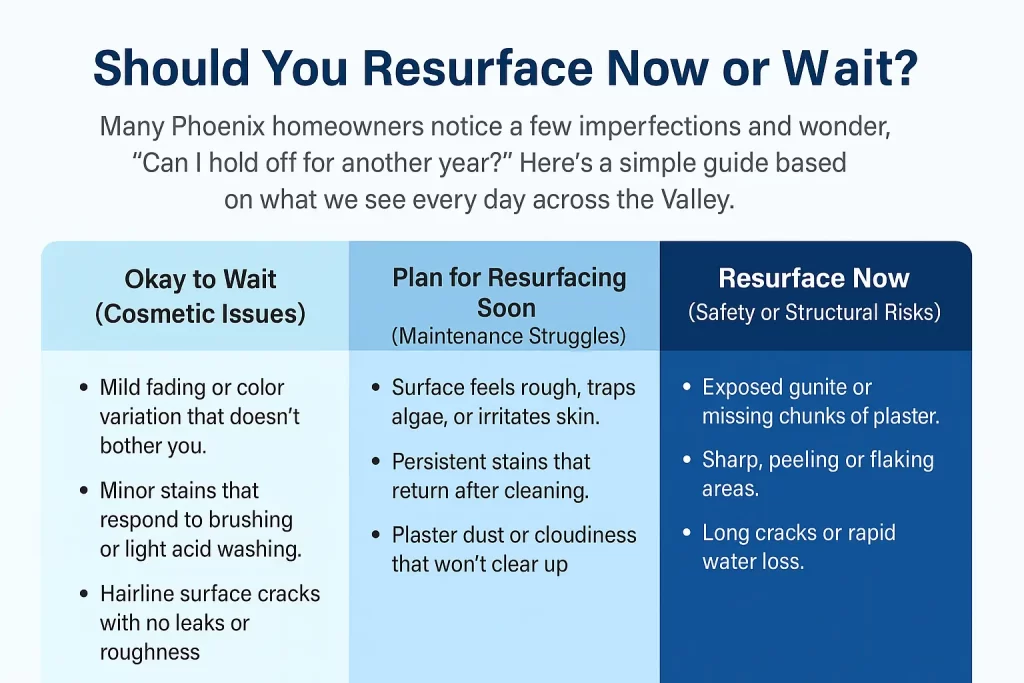
You likely need resurfacing if you’re seeing surface-level wear or cosmetic issues.
Cosmetic or Surface-Level Issues:
- Rough or sandpaper-like texture on the interior.
- Plaster peeling, flaking, or chipping.
- Persistent algae spots that won’t fully brush away.
- Stains and discoloration that don’t respond to cleaning.
- Fading plaster color.
- Pebble coming loose or shedding.
- Hairline surface cracks.
- Exposed gunite in small areas.
These problems don’t usually require structural work — pool resurfacing fixes all of them.
Arizona homeowner tip: If plaster dust appears every time you brush, your surface is wearing thin and needs attention soon.
Signs You Need Pool Remodeling
You likely need a remodel if your pool has functional or structural problems, not just cosmetic ones.
Structural Issues Include:
- Long cracks running through the pool shell.
- Rust or rebar bleed-through spots.
- Waterline tile popping off in sections.
- Deck heaving, lifting, or severe cracking.
- A failing or outdated skimmer.
- Plumbing leaks or poor circulation.
Design or Functional Reasons:
- You want a Baja shelf for lounging.
- You want new decking like travertine or pavers.
- You want updated waterline tile or coping.
- Your pool shape feels outdated.
- You want LED lights, automation, or new equipment.
- You want a shallower play-pool design instead of a deep diving pool.
If any of these apply, a full pool remodel is the safer and more cost-efficient choice than resurfacing alone.
What’s the Cost Difference in Arizona?
Below are the typical price ranges Arizona homeowners see for resurfacing and remodeling projects.
Pool Resurfacing Costs
| Finish Type | Arizona Cost Range |
|---|---|
| Standard Plaster | $5,500 – $9,000 |
| Mini Pebble | $7,500 – $12,500 |
| Pebble Tec | $8,500 – $14,000 |
| Quartz | $6,500 – $11,000 |
Pool Remodeling Costs
| Remodel Type | Arizona Cost Range |
|---|---|
| Resurface + New Tile | $10,000 – $18,000 |
| Deck Remodel | $8,000 – $20,000 |
| Travertine Remodel | $15,000 – $35,000 |
| Add a Baja Shelf | $4,000 – $10,000 |
| Depth Conversion | $7,000 – $15,000 |
| Full Pool Overhaul | $20,000 – $45,000+ |
Most Arizona homeowners who start with “just resurfacing” end up spending $12,000–$18,000 after adding tile, coping, or updated pool decking.
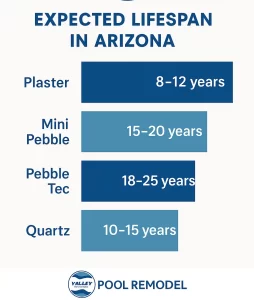
Which Lasts Longer? (Expected Lifespan in Arizona)
Resurfacing Lifespan
- Plaster: 8–12 years
- Mini pebble: 15–20 years
- Pebble Tec: 18–25 years
- Quartz: 10–15 years
Remodeling Upgrade Lifespan
- Decking: 15–30 years
- Tile & coping: 15–20 years
- Plumbing: 25–40 years
- Equipment: 5–12 years
Because of Arizona’s heat, hard water, and UV exposure, resurfacing tends to wear down sooner unless water chemistry is tightly maintained.
How to Choose: Resurfacing vs. Remodeling (Fast Decision Guide)
Choose Resurfacing If Your Pool Has:
- Rough or peeling interior.
- Stains and discoloration.
- Exposed gunite in localized areas.
- Fading plaster or worn pebble.
- Outdated interior finish but solid structure.
- No structural cracks or deck movement.
Choose Remodeling If Your Pool Has:
- Tile popping or falling off.
- Rust or rebar bleed showing through plaster.
- Deck cracks, lifting, or heaving.
- A failing or outdated skimmer.
- Structural cracks or suspected leaks.
- Old, outdated design you want to modernize.
Still unsure? A free inspection from Valley Pool Remodel will reveal whether the issue is surface-level or structural.
Most Popular Options for Arizona Pool Remodels Right Now
- Adding a Baja shelf for lounging.
- New modern waterline tile.
- Travertine or paver pool decks.
- New LED lighting.
- Water features and spillways.
- Tile & coping overhauls.
- Quartz or mini-pebble resurfacing.
These are the upgrades Valley homeowners request most because they improve safety, comfort, energy efficiency, home value, and overall look.
How Valley Pool Remodel Helps You Decide
The team at Valley Pool Remodel walks every homeowner through a simple, transparent process:
1. Inspect Your Pool In Person
We look for surface wear, structural cracks, tile condition, deck movement, and equipment issues so you have a clear picture of what’s going on.
2. Explain What’s Optional vs. What’s Needed
You’ll get a clear distinction between structural fixes, cosmetic upgrades, safety concerns, and purely optional enhancements so you can make the best decision for your budget.
3. Provide a Detailed, No-Pressure Estimate
We explain pricing and timelines upfront — no surprises, no hidden fees.
4. Complete the Work with Licensed, Bonded, Insured Crews
Our team has remodeled and resurfaced pools across Phoenix and the East Valley for more than 20 years.
Why Arizona Homeowners Trust Valley Pool Remodel
- 20+ years serving Phoenix & the East Valley.
- Licensed, bonded, and insured.
- Clear communication from start to finish.
- Transparent pricing with no hidden fees.
- Industry-leading craftsmanship built for Arizona’s climate.
- 5-star customer reviews from local homeowners.
- Finishes and materials selected for heat, UV, and durability.
From light resurfacing to complete pool remodels with new tile, decking, and features, we handle everything start to finish.
Still Not Sure What Your Pool Needs? We Can Help.
If you’re unsure whether your pool needs resurfacing or a full remodel, the easiest next step is a quick on-site evaluation.
You’ll get:
- A clear diagnosis of your pool’s condition.
- Honest recommendations based on your goals and budget.
- Pricing for both resurfacing and remodeling options.
- A timeline that fits your schedule.
Book a Free On-Site Consultation with Valley Pool Remodel today, and we’ll help you understand what your pool really needs — and what you can safely wait on.
Frequently Asked Questions
How do I know if my pool needs resurfacing or a full remodel?
Resurfacing is usually enough if your pool has a rough surface, peeling plaster, stains, or exposed gunite. If you’re seeing tile popping, structural cracks, rust spots, deck issues, or leaks, a remodel is the better choice.
How often do pools need resurfacing in Arizona?
Because of extreme UV exposure and high water temperatures, Arizona pools typically need resurfacing every 8–12 years for plaster and every 15–20 years for mini pebble.
Does resurfacing fix cracks?
Hairline cosmetic cracks can be patched during resurfacing, but structural cracks require remodeling or shell repair to prevent leaks and long-term damage.
Can I change my pool tile without remodeling the whole pool?
Yes. Waterline tile can be replaced on its own or paired with resurfacing. Remodeling is only needed if there are structural issues or major design changes.
Is it worth adding a Baja shelf during resurfacing?
Adding a Baja shelf requires structural changes, so it’s considered remodeling—not resurfacing. Many Arizona homeowners choose to add one because it increases usability and resale value.
How long does pool resurfacing take?
Most resurfacing projects take 5–7 days, depending on the finish and curing time. Remodeling projects may take 2–5 weeks depending on scope.
Can resurfacing improve water clarity or algae problems?
Yes. A new smooth surface reduces algae growth, improves circulation efficiency, and makes your pool easier to maintain—especially during Arizona summers.